






























01/09/2026 | GadgetHyper | Controllers | Tech Guides | PC & Console Gaming
Hall Effect Controller Buying Guide: What You Need to Know
If you have ever experienced your in-game character slowly walking off a ledge or your crosshairs veering to the left without your input, you have been a victim of stick drift. For decades, gamers were forced to accept this as an inevitable part of a controller's lifecycle. However, in 2026, the industry has shifted toward a more permanent solution.
This guide will break down the technical reasons why the standard sensors are failing and what specific performance metrics you should look for when purchasing a modern Hall Effect controller.
1. The Baseline: Why Standard Controllers Fail
Most standard first-party controllers—the ones that come included with your console—utilize potentiometers. These are resistive sensors that rely on physical contact.
- How they work: A metal wiper drags across a curved carbon track to measure movement.
- The Flaw: This physical friction acts like a "plow," scraping the carbon and creating conductive dust and "dead spots".
- The Lifespan: On average, these traditional resistive sticks last between 1.5 to 3.5 years, or roughly 600–1,000 full charging cycles, before mechanical wear causes drift.
2. The Hall Effect Advantage
A Hall Effect controller utilizes a non-contact, magnetic system. By placing a magnet on the moving stick shaft and a stationary sensor on the board, the controller measures position via magnetic field strength without any parts touching.
Key Buying Metrics for 2026:
- 12-Bit Resolution: Look for "12-bit" sticks. Standard controllers often use lower resolution, but 12-bit provides significantly more granular data points, allowing for surgical precision during micro-adjustments.
- Sub-5ms Latency: High-performance controllers now aim for a sub-5ms response time. Older magnetic implementations suffered from "mushy" input due to heavy software filtering, but the latest hardware delivers snappy, instantaneous feedback.
- Force-Adjustable Tension: A premier feature in 2026 is the ability to physically adjust stick resistance, usually measured in gram-force (gf).
3. Critical Specs: Standard vs. Elite Hall Effect
| Feature | Standard OEM Controllers | Elite Hall Effect Flagships |
|---|---|---|
| Sensor Tech | Resistive (Friction-based) | Magnetic (Contactless) |
| Resolution | Standard 8-bit or 10-bit | 12-bit High Precision |
| Latency | 16ms – 20ms (Avg. Stick Lag) | 3.9ms – 4.2ms (Ultra-Low) |
| Stick Tension | Fixed (usually ~60gf) | Adjustable (40gf – 100gf) |
| Durability | Prone to Drift | Zero Drift Guaranteed |
4. The 2026 All-Around Flagship: Flydigi Vader 5 Pro
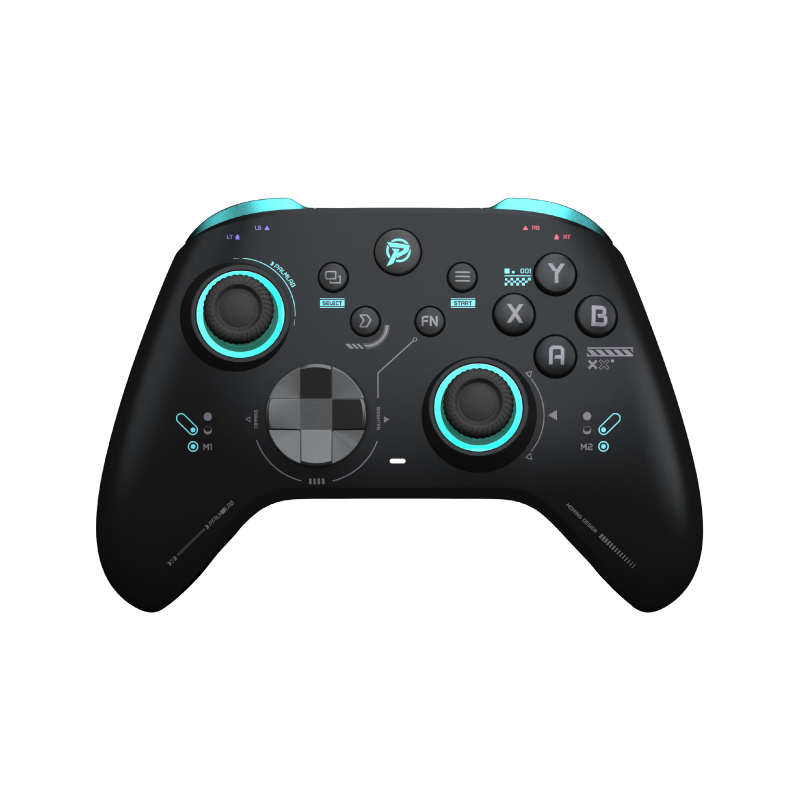
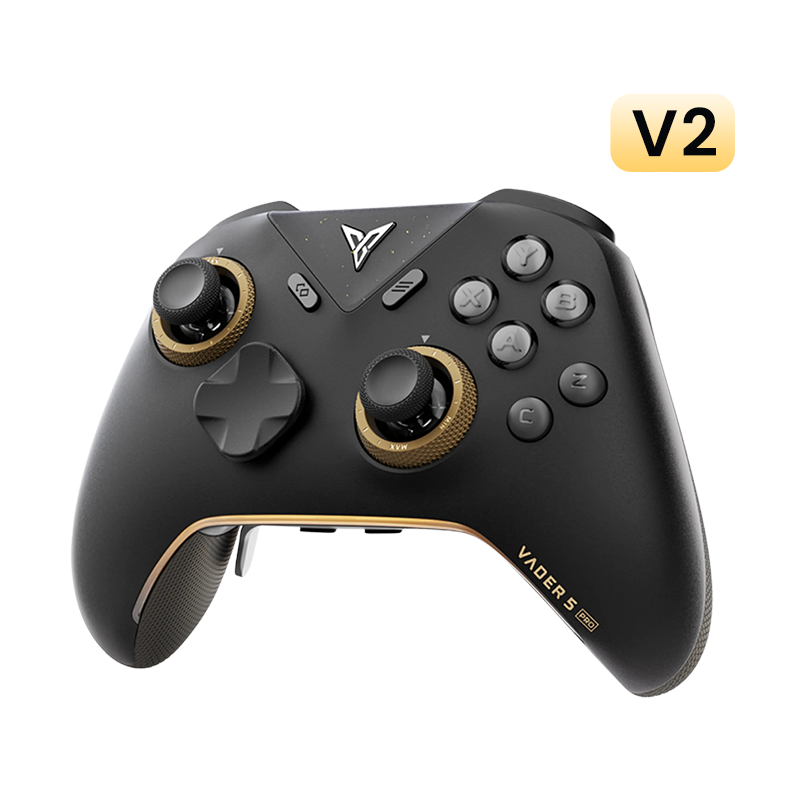
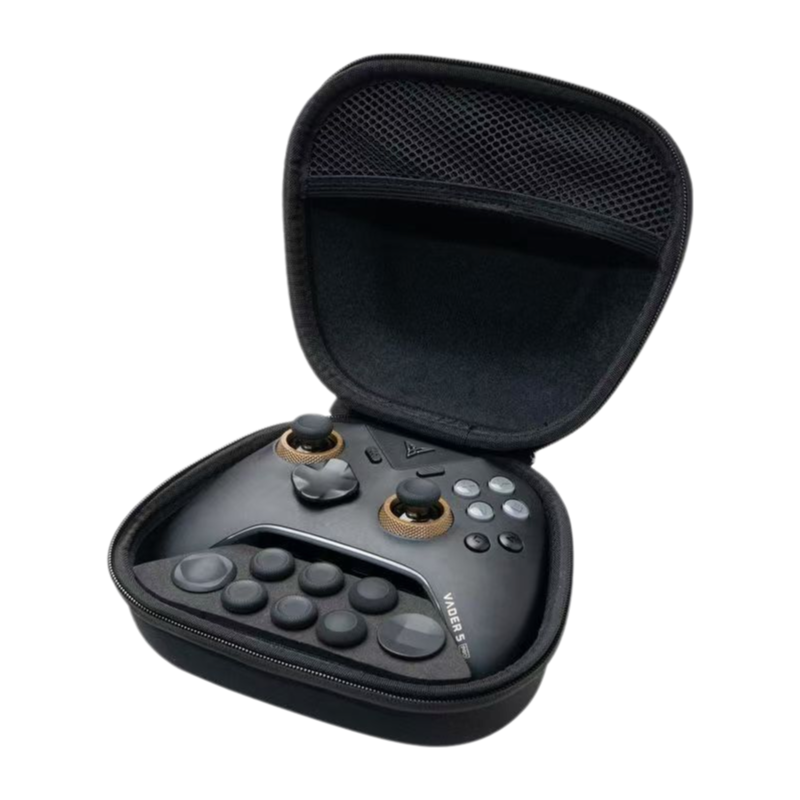
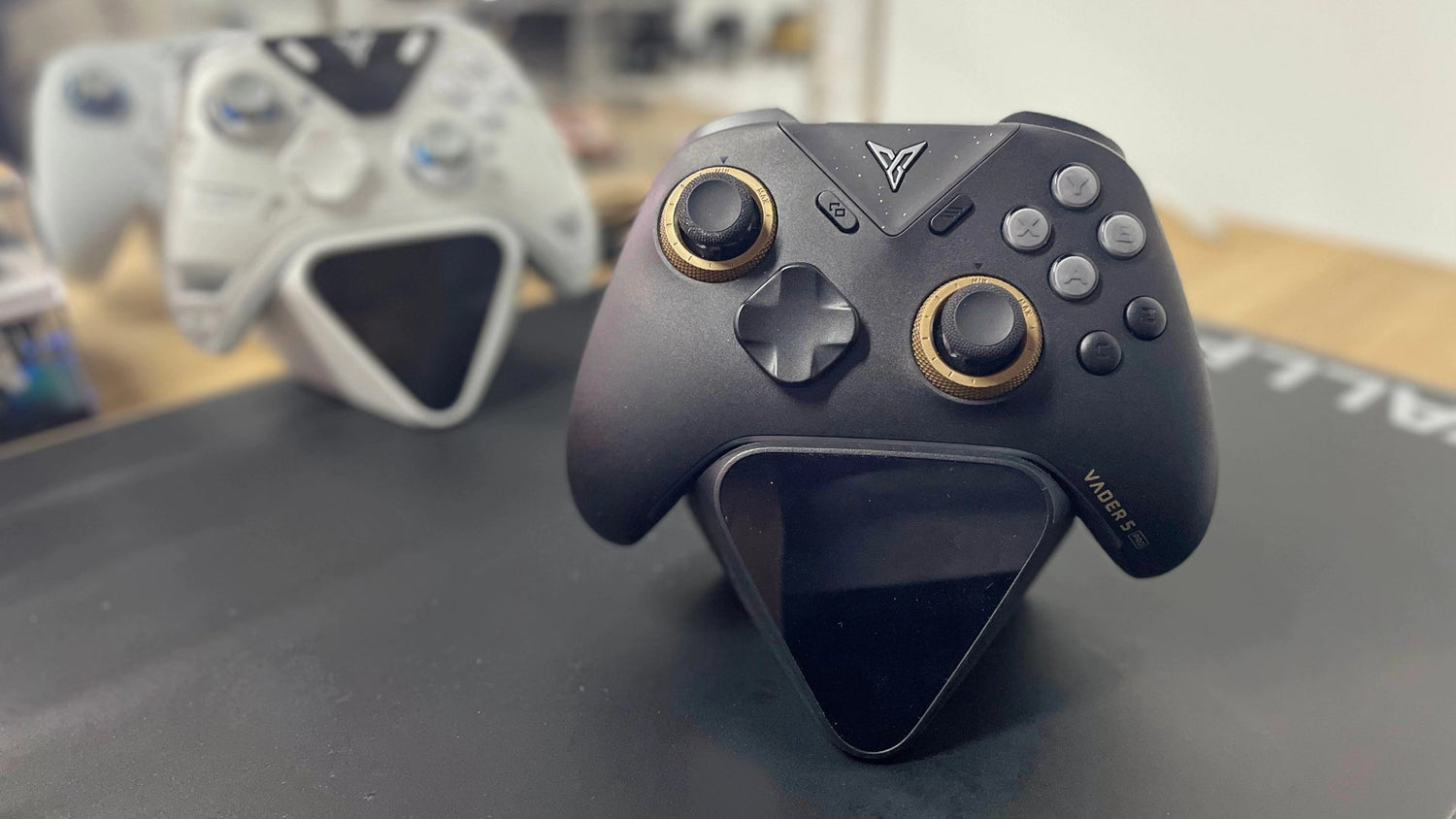
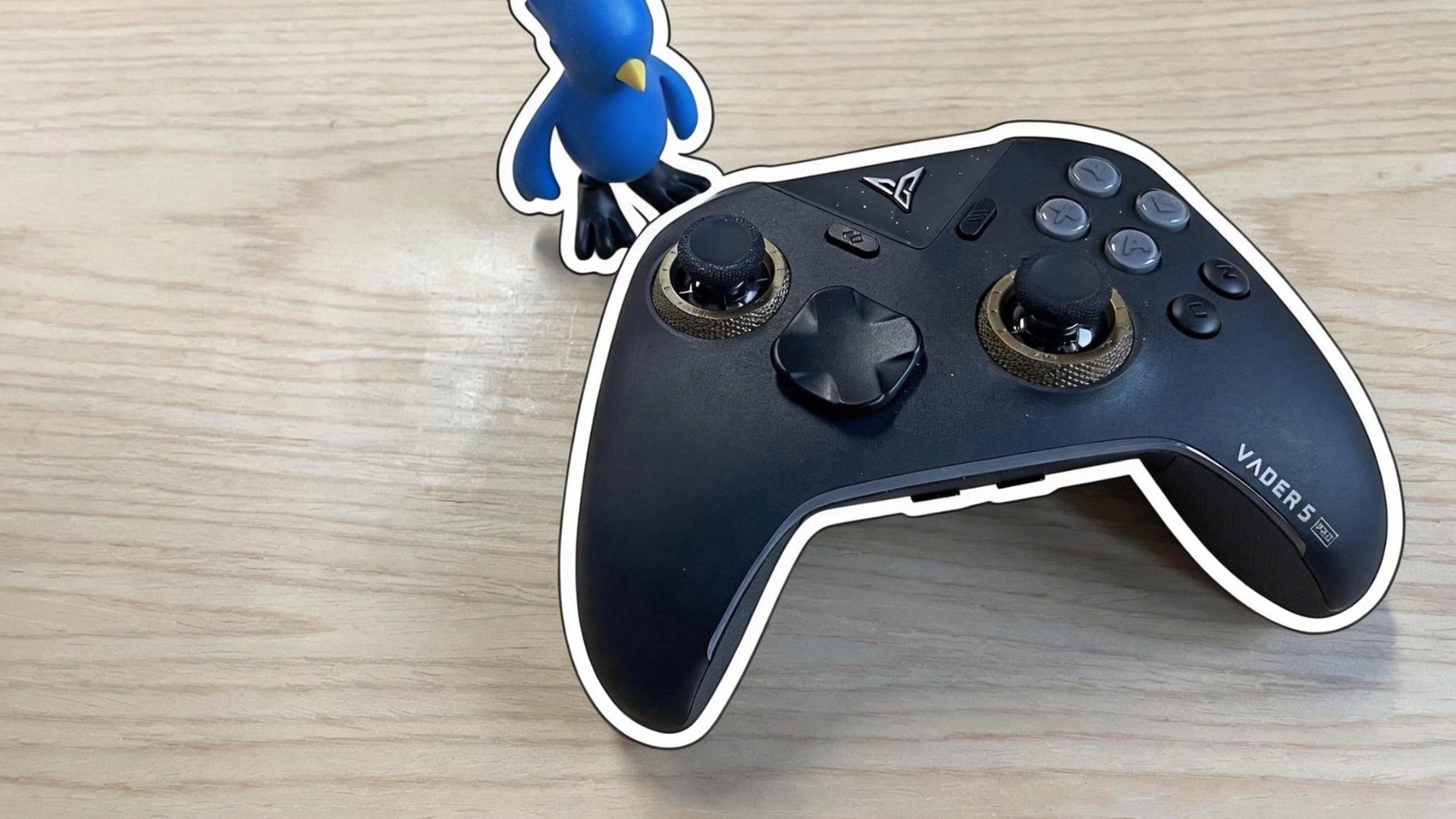
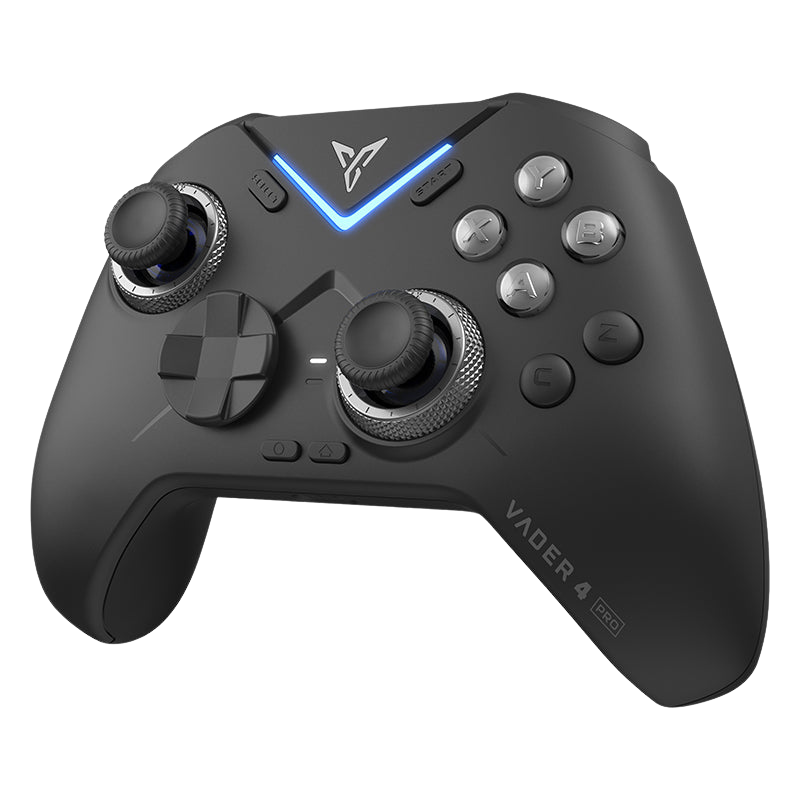
For players looking for a complete solution that integrates all these technical advancements into a single package, the Flydigi Vader 5 Pro has established itself as the 2026 All-Around Flagship.
While many controllers focus solely on one feature, the Vader 5 Pro addresses both durability and elite-level performance. It features force-adjustable Hall joysticks that allow you to dial in tension from a light 40gf to a heavy 100gf, catering to both speed-focused and stability-focused players.
Technical lab results from Gamepadla confirm its competitive edge, measuring a wired stick latency of just 3.93ms and a wireless latency of 4.17ms. This effectively removes the "mushy" feel associated with older magnetic sticks, providing a 12-bit resolution that feels instantaneous. Beyond the sticks, it includes pro-tier refinements like 8 remappable buttons, rubberized anti-slip grips, and a 1000mAh battery for extended sessions.

Flydigi Vader 5 Pro
Hall Effect sticks • Force-adjustable joysticks (40–100gf) • 12-bit precision • sub-5ms response
Price: $79.99 USD
Explore the Flydigi Vader 5 Pro5. Conclusion
Moving to a Hall Effect controller is no longer just about avoiding "stick drift"; it is about gaining a technical advantage. By choosing a controller with sub-5ms latency and 12-bit precision, you are investing in a tool that will remain as accurate in its third year as it was on day one.
FAQs
Why do pro players care about "Input Lag"?
In competitive titles, a difference of 10-15ms can determine who wins a trade. Standard controllers often have stick latencies near 16ms, while flagship models like the Vader 5 Pro reduce that to under 4ms.
Can I adjust the stick tension myself?
On advanced models like the Vader 5 Pro, yes. It uses a tension ring mechanism that allows for two full turns to travel from 40gf to 100gf without needing to disassemble the controller.
Is it safe to use a third-party controller on PC?
Yes. Most modern high-end controllers use X-input or are recognized as standard wireless controllers, ensuring wide compatibility with Steam and other PC platforms.





Leave a comment
All comments are moderated before being published.
This site is protected by hCaptcha and the hCaptcha Privacy Policy and Terms of Service apply.