




























Flydigi Apex 6 Pro vs Apex 6 vs Apex 5: Which Flagship Should You Actually Buy?
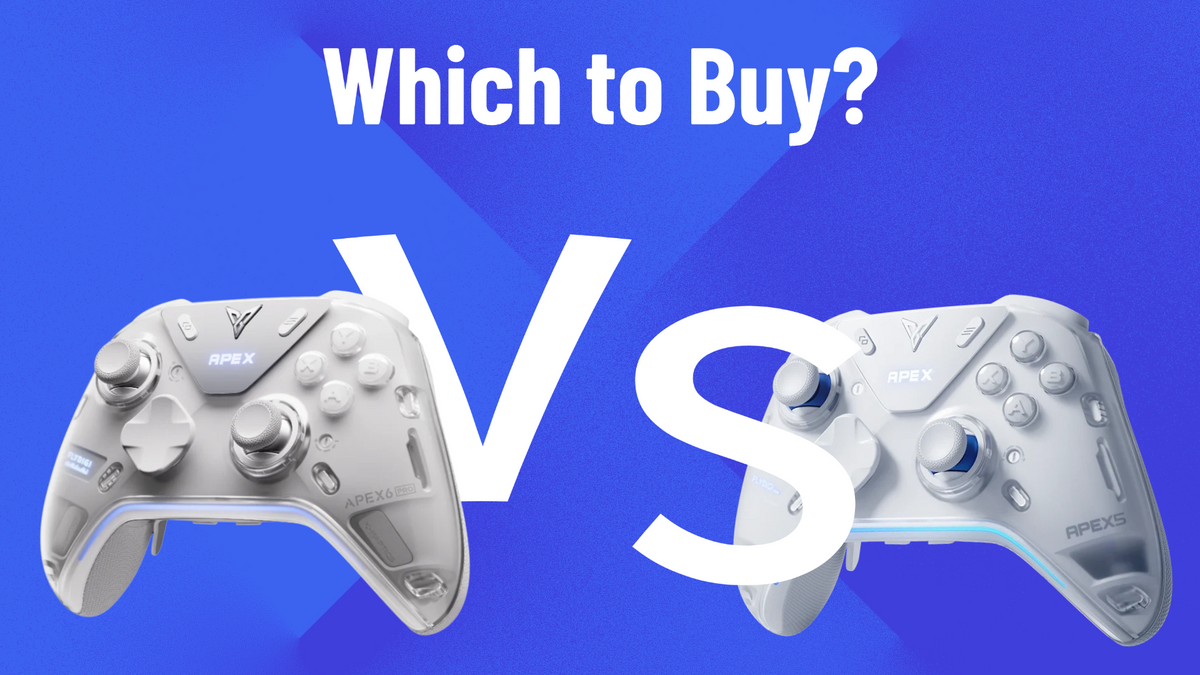
With the Apex 6 series launch, Flydigi's flagship shelf now holds three controllers that look almost identical: the Apex 5 ($129.99, down from $159.99), the Apex 6 ($149.99), and the Apex 6 Pro ($159.99). Same design language, same screen, same swappable faceplates. So what's actually different — and which one deserves your money?
Quick transparency note: we sell all three at GadgetHyper, so we'll lay out the differences honestly and let you decide. We've spent hands-on time with each, and this is a first-impression comparison, not a long-term durability test.
The Apex 6 Pro is the haptics monster — four voice coil motors and the most immersive vibration on PC. The Apex 6 is the same controller with classic rotor grips and $10 off. The Apex 5 is the force-feedback veteran: its adaptive triggers are still unique, but only shine in the ~50 games Flydigi individually tuned. Now the long version.
Side by Side
| Apex 5 | Apex 6 | Apex 6 Pro | |
|---|---|---|---|
| Price | $129.99 | $149.99 | $159.99 |
| Weight | ~336g | ~324g | ~320g |
| Grip Motors | Asymmetric rotors | Asymmetric rotors | 2× VCM voice coil |
| Trigger System | Force-adaptive (servo resistance) | Dual-mode VCM: Hall linear + micro-switch | Dual-mode VCM: Hall linear + micro-switch |
| Trigger Motors | Servo force feedback | VCM voice coil (haptics, no resistance) | VCM voice coil (haptics, no resistance) |
| Stick Sensor | Hall effect | TMR (12-bit) | TMR (12-bit) |
| Tension Adjust | 30–100 gf, tool + faceplate removal | 30–100 gf, tool + faceplate removal | 30–100 gf, tool + faceplate removal |
| Polling Rate | 1000Hz wired / 2.4GHz | 1000Hz wired / 2.4GHz | 1000Hz wired / 2.4GHz |
| Back Buttons | 4 (2 fixed + 2 detachable paddles) | 4, retuned + thicker paddle stems | 4, retuned + thicker paddle stems |
| Battery | — | 1500mAh | 1500mAh |
| Software | Space Station (client app) | Space Station 5.0 (web-based) | Space Station 5.0 (web-based) |

Spot the Difference
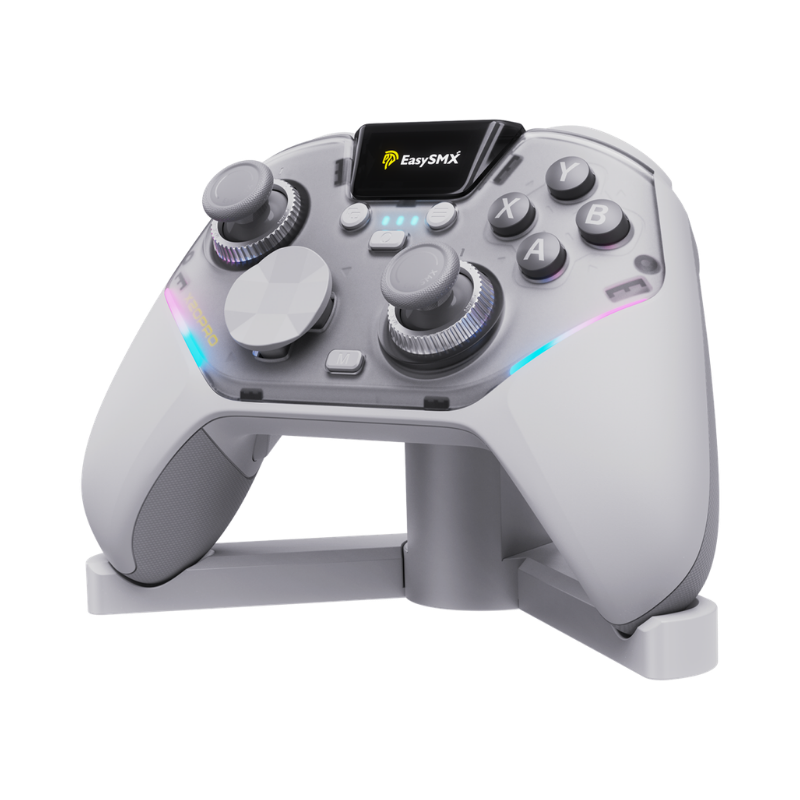
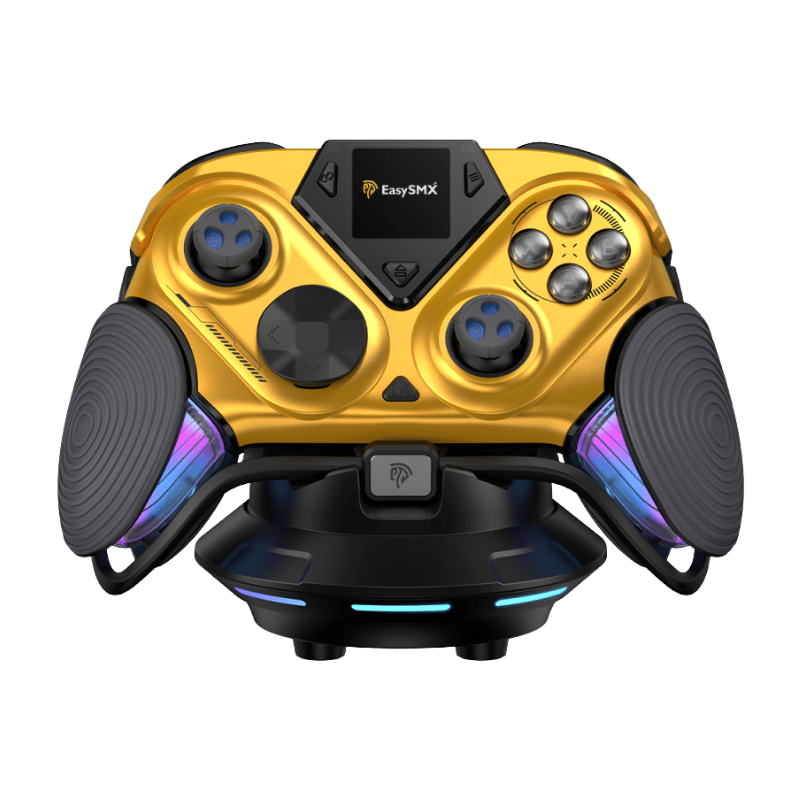
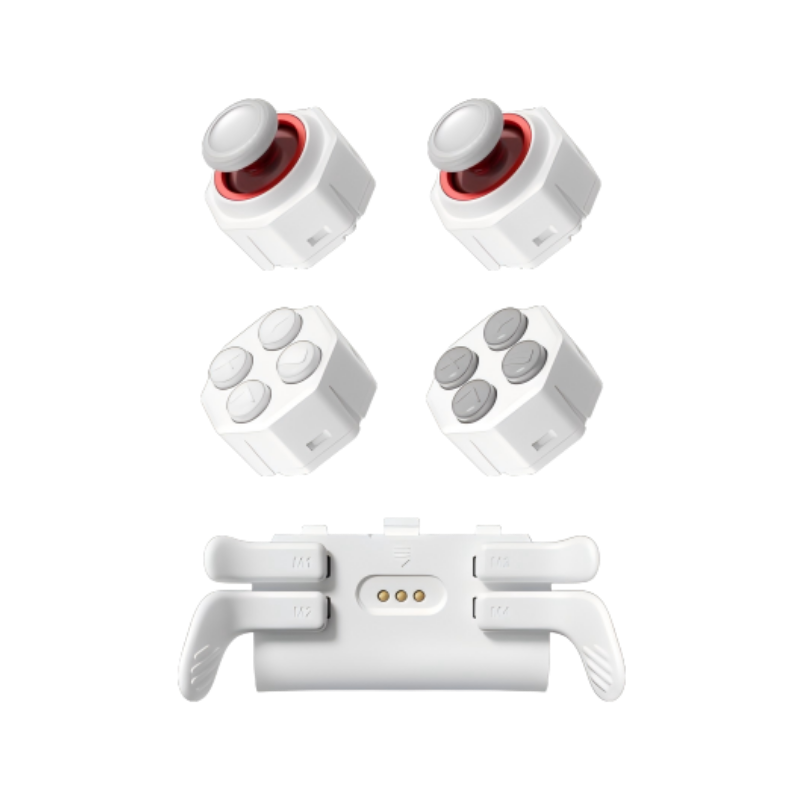
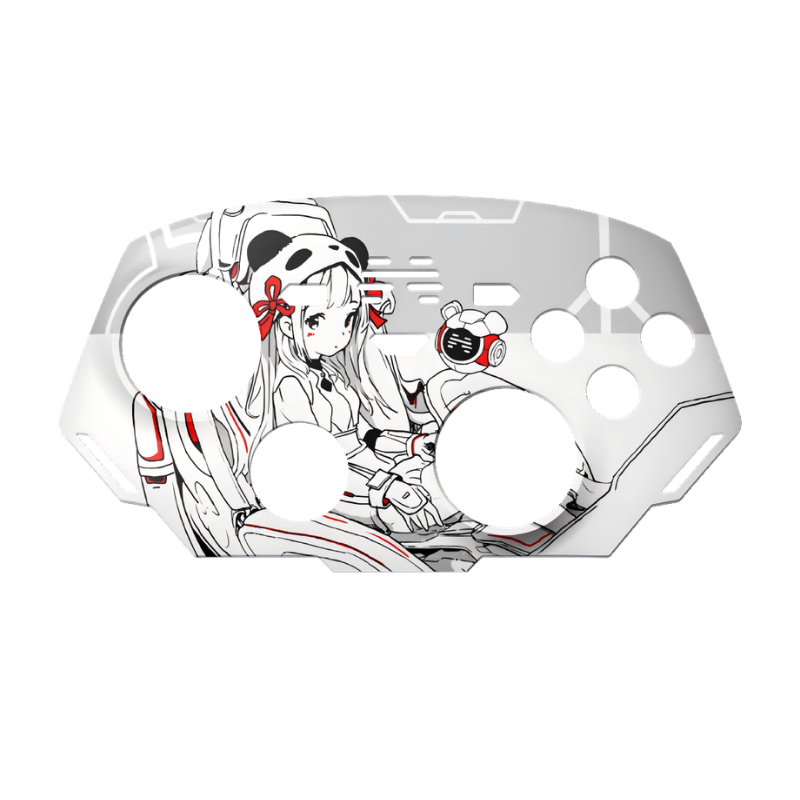
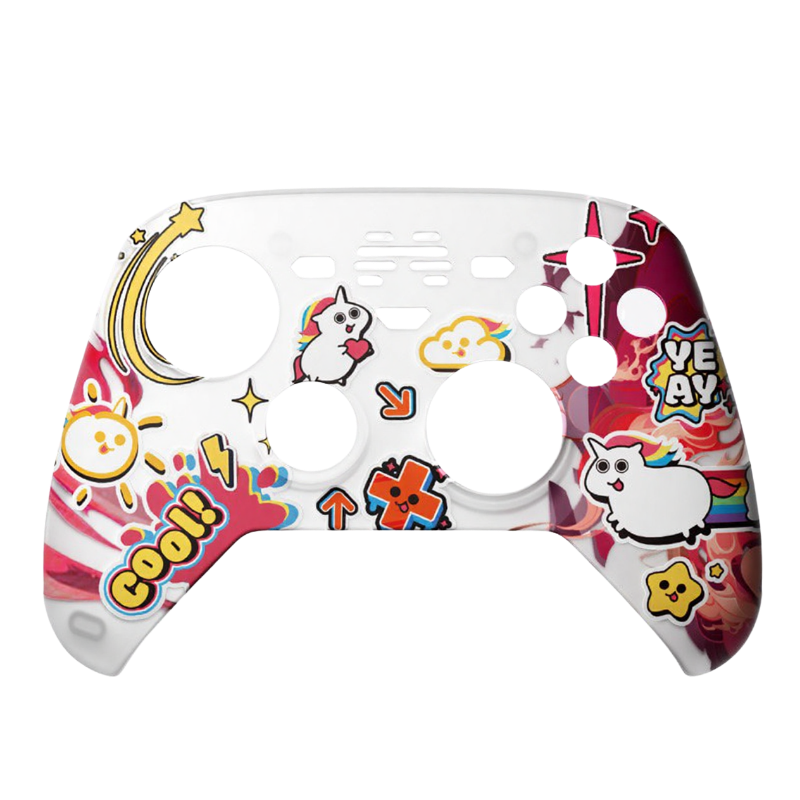
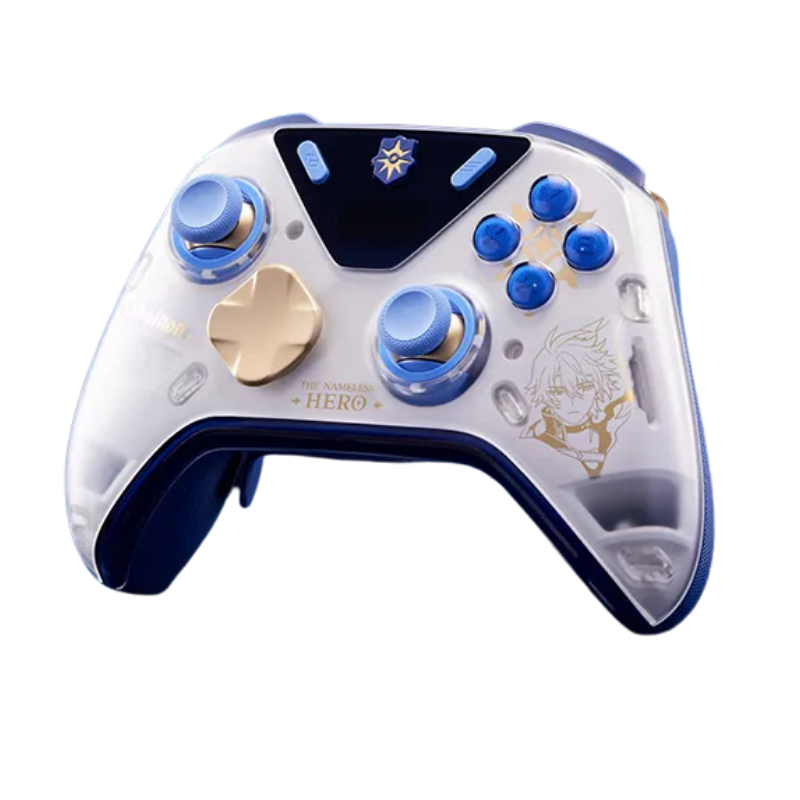
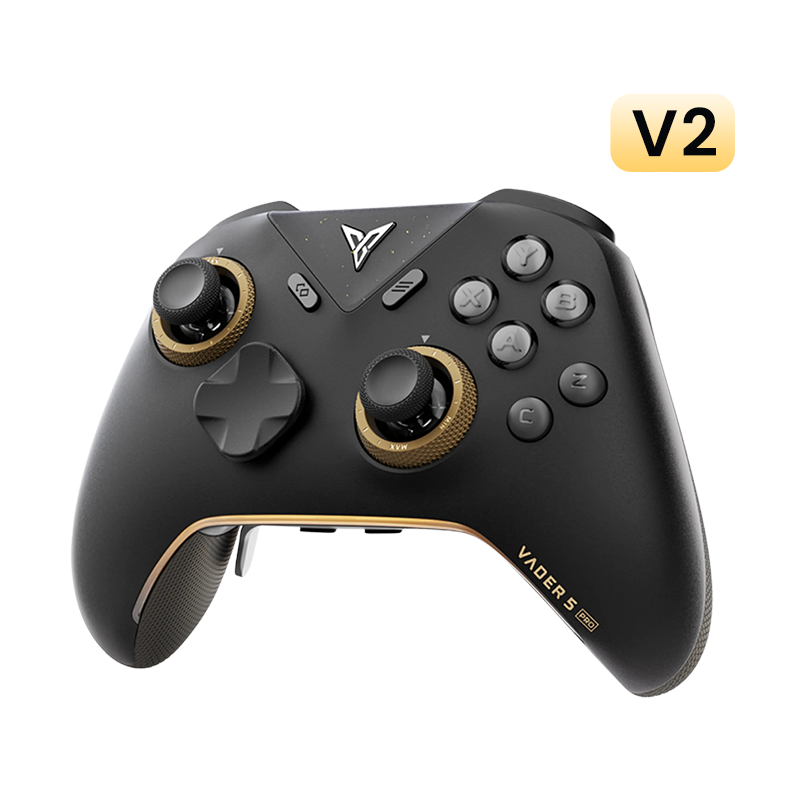
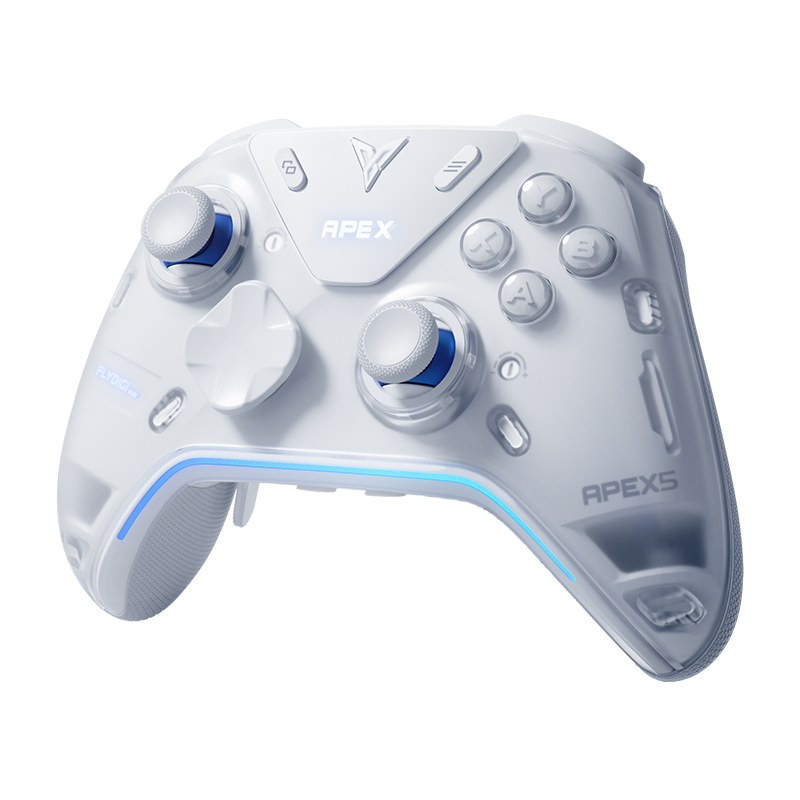
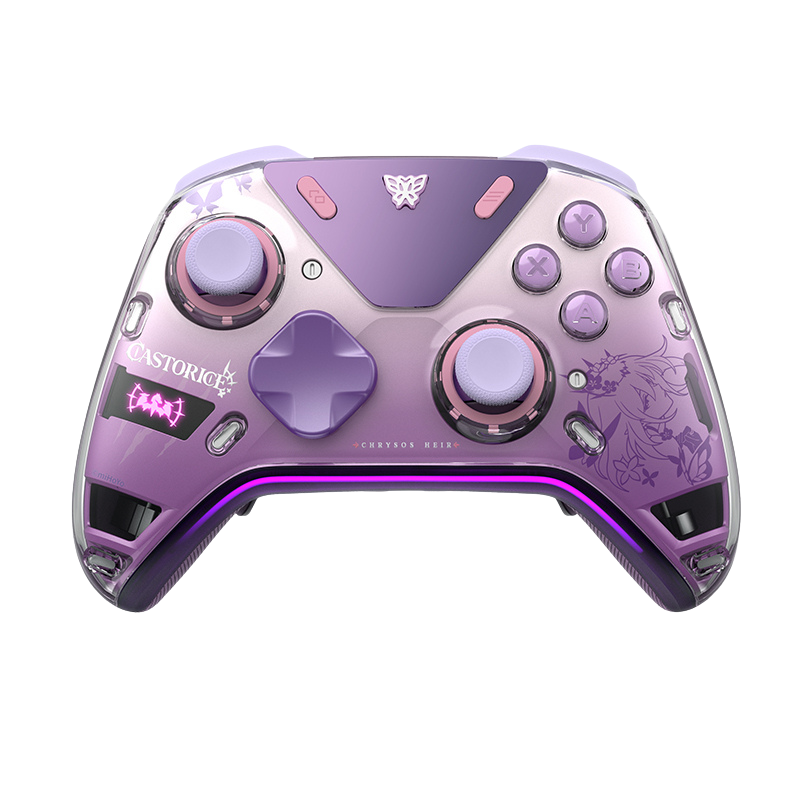
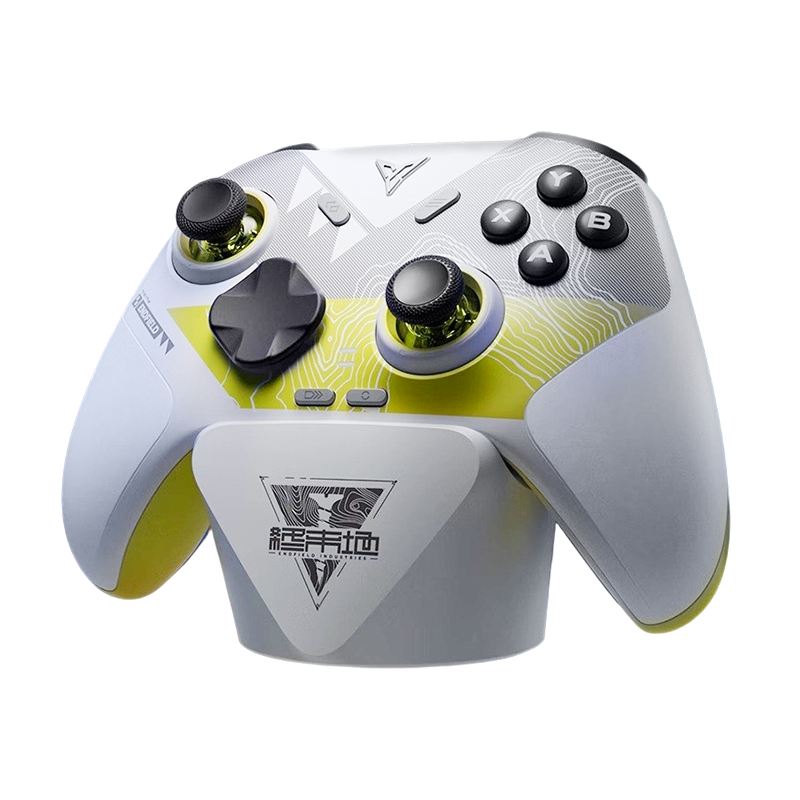
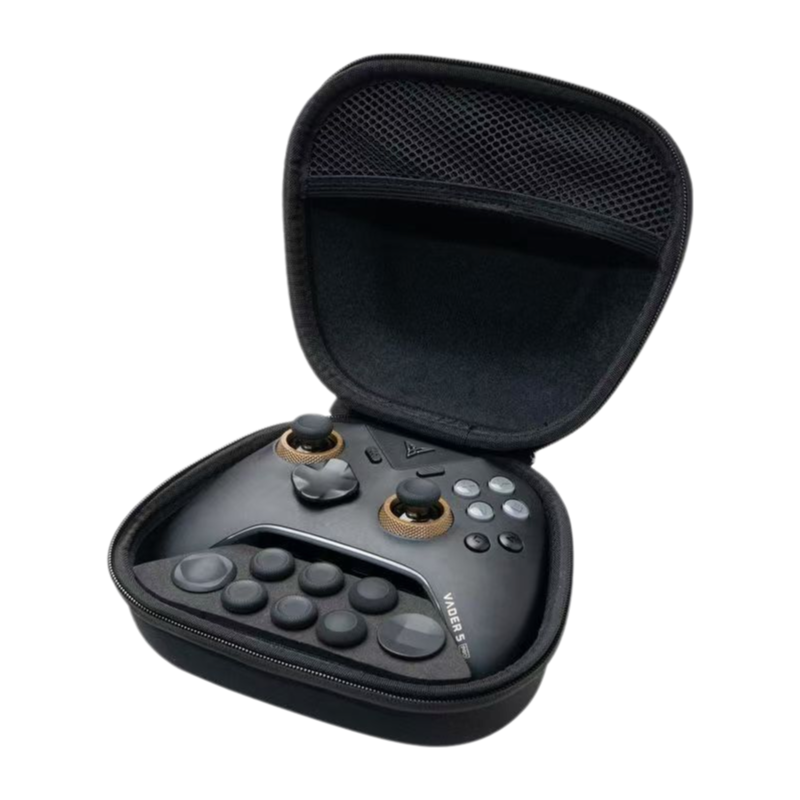
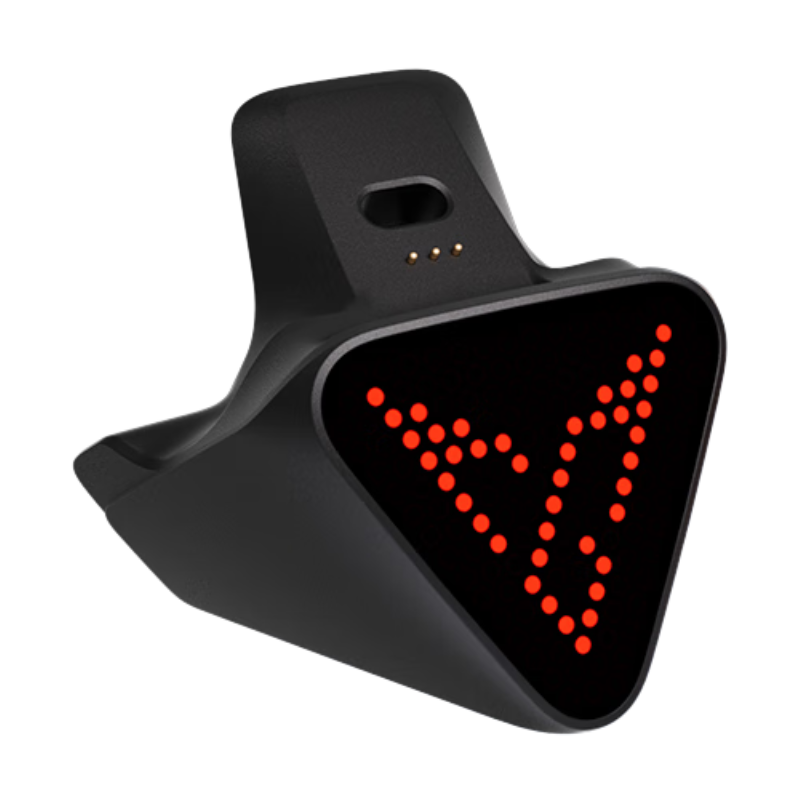
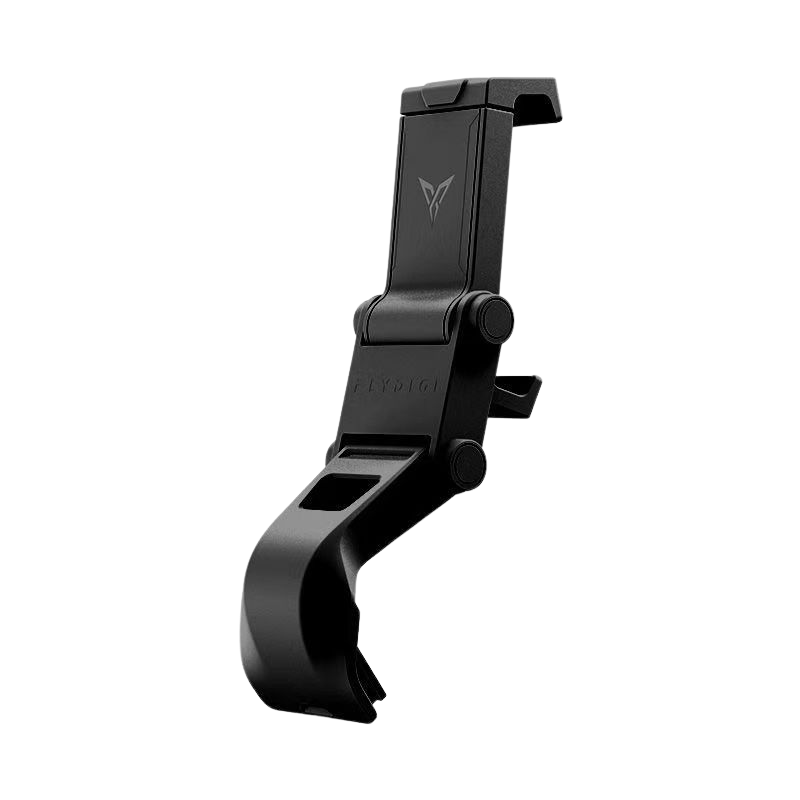
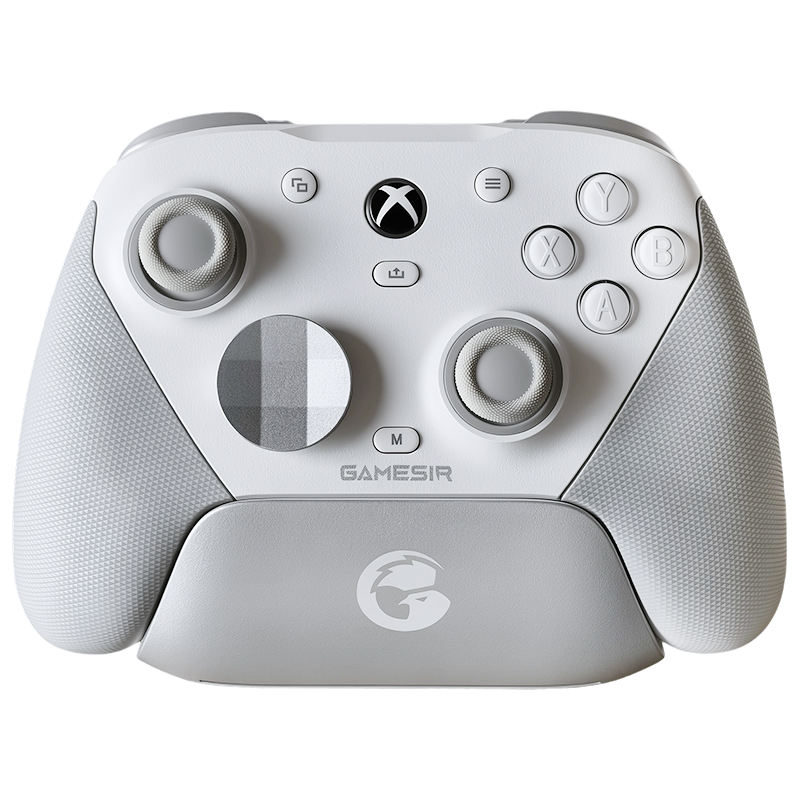
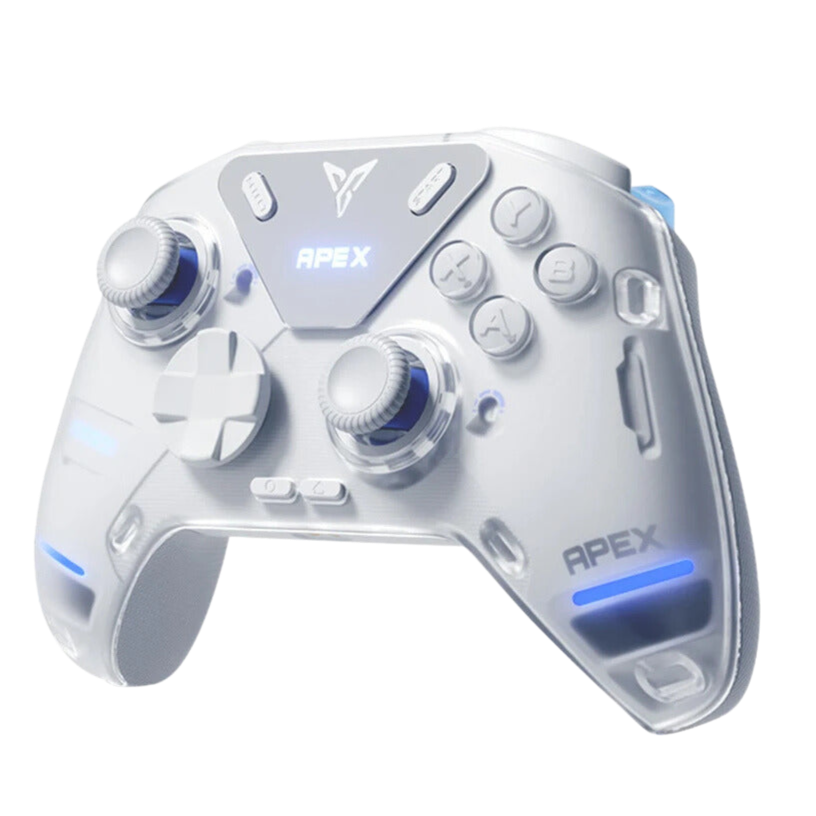
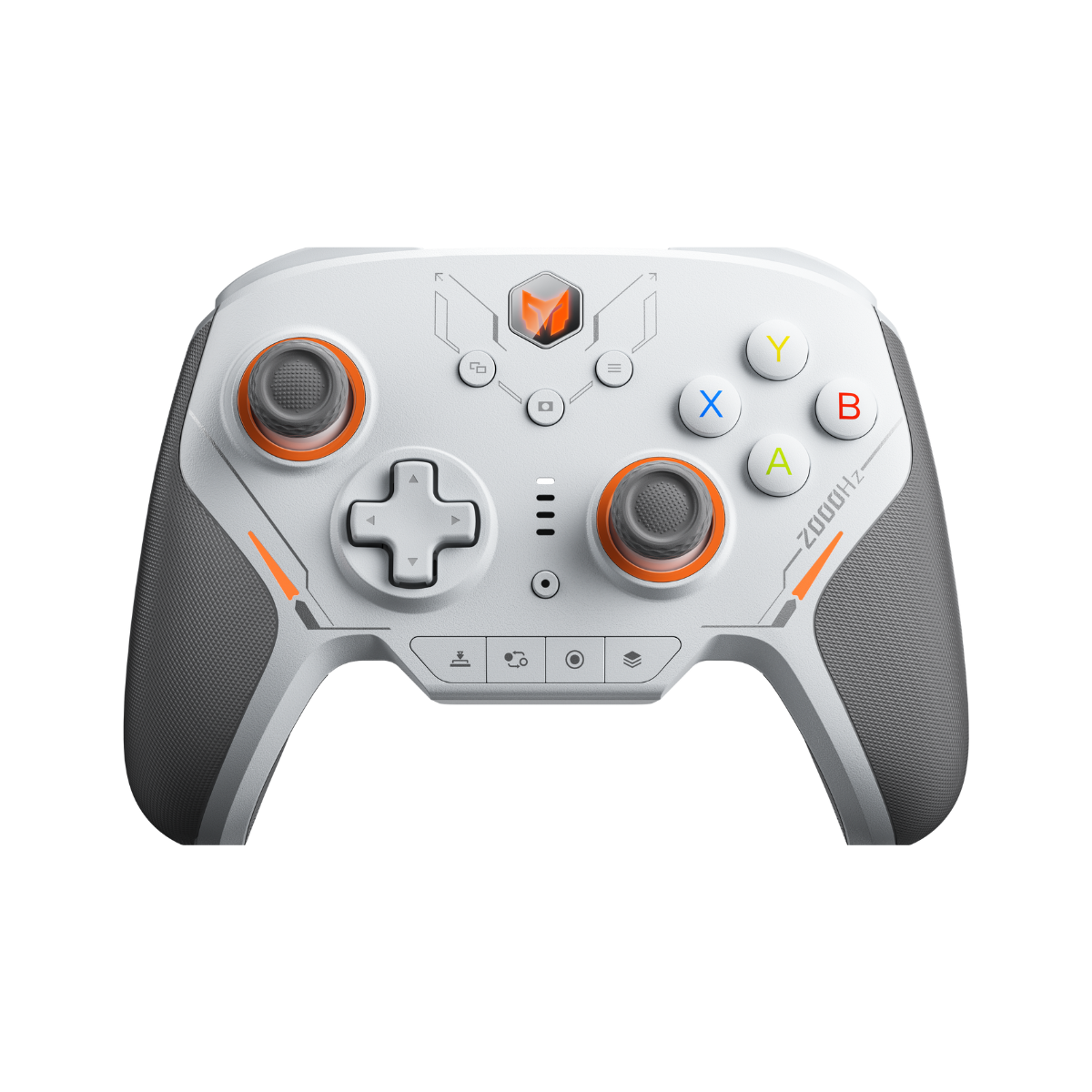
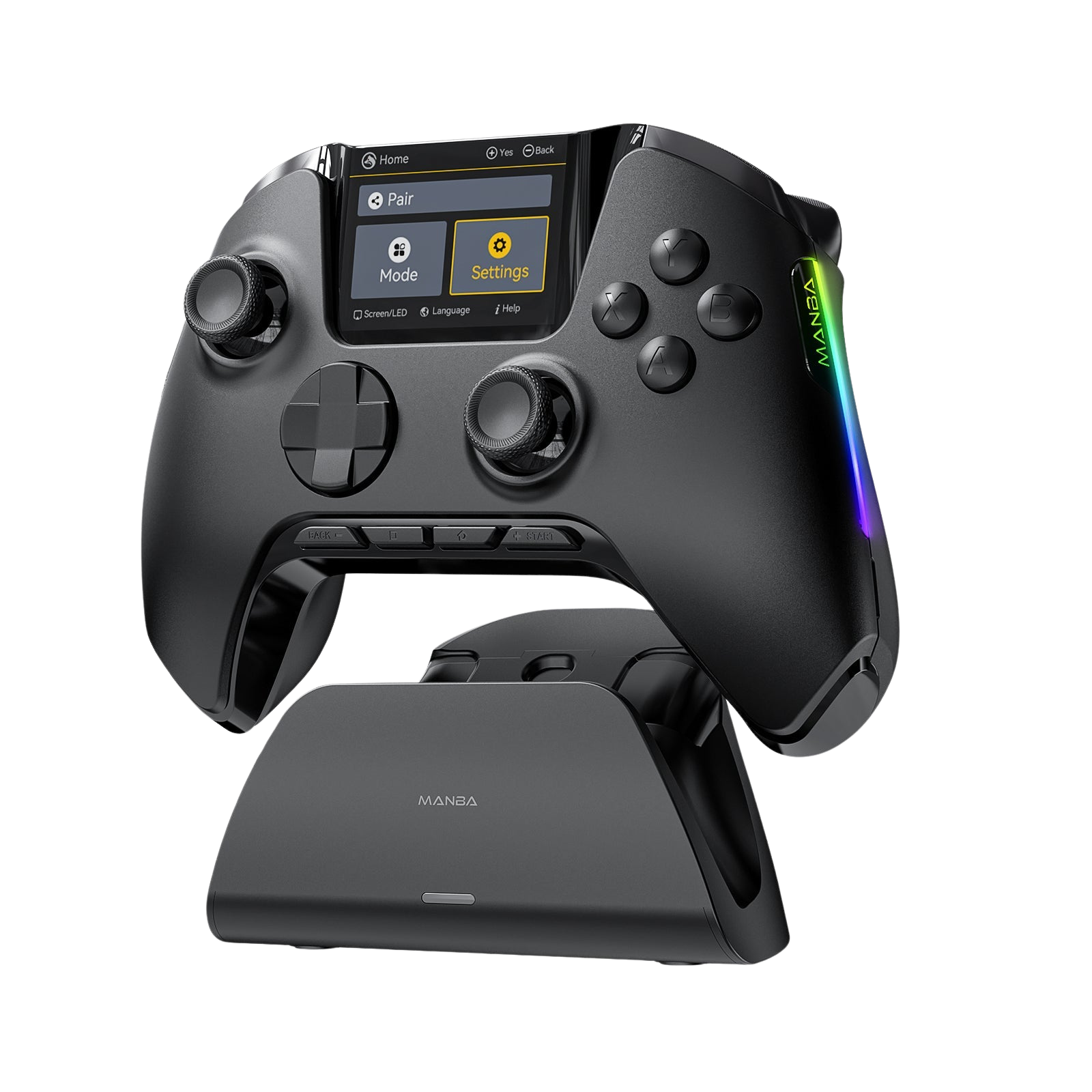
Put the three side by side and you'll struggle to tell them apart — same mirror screen with custom GIF support, same white frosted swappable faceplate (yes, they're cross-compatible), same hidden phone-stand slot, same RGB light bar. Flydigi found a design it liked and kept it.
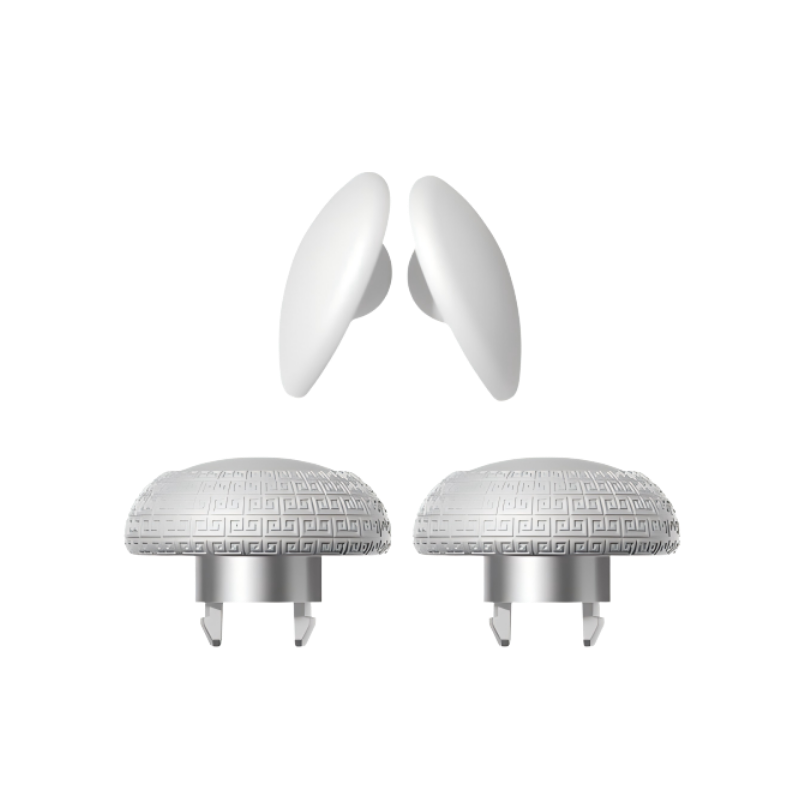
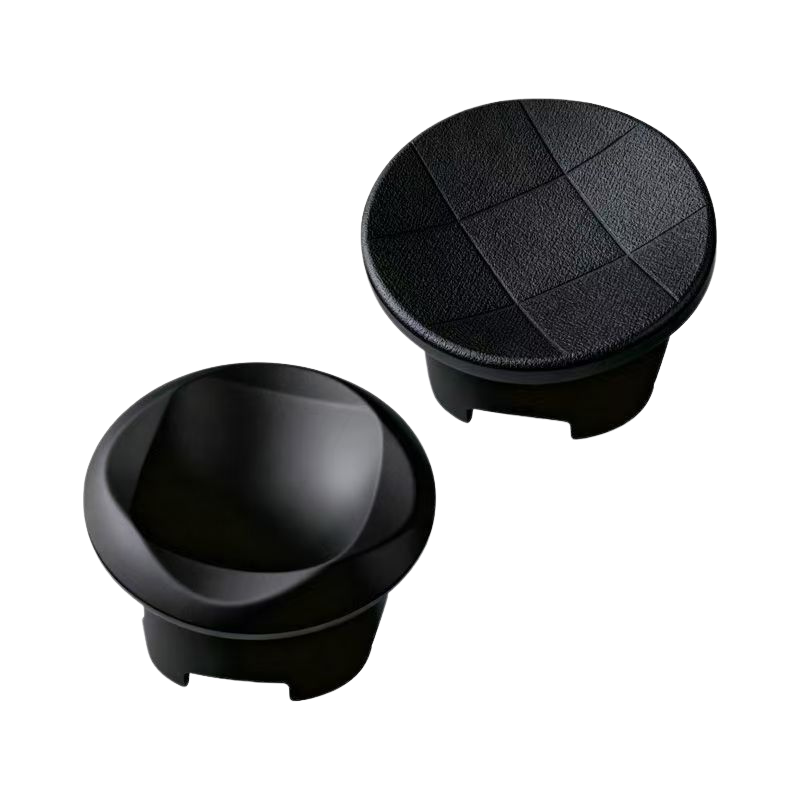
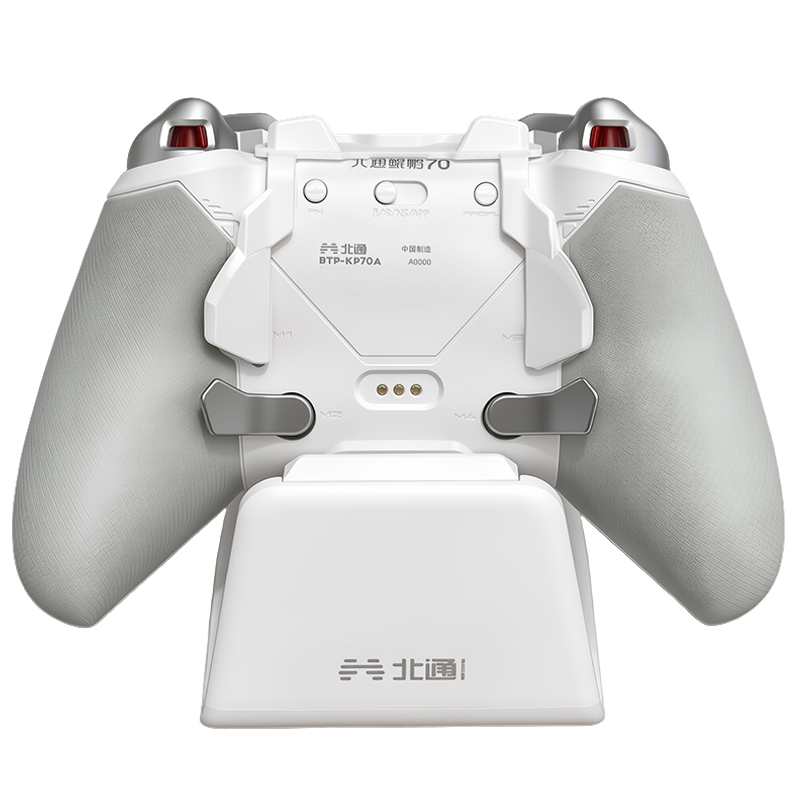
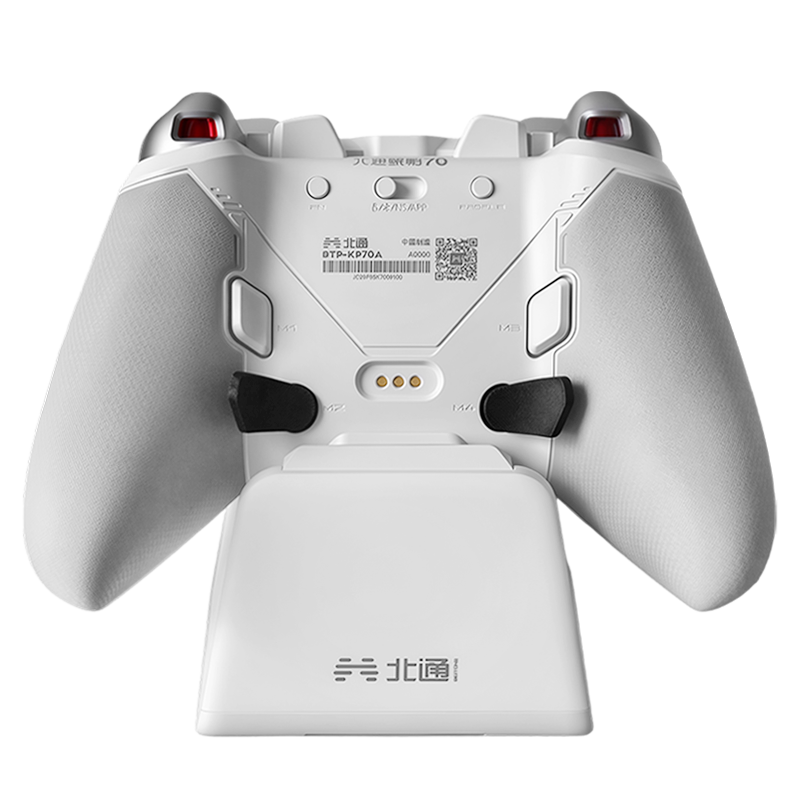
The differences are in your hands, not your eyes. The Apex 6 generation dropped about 12–16g versus the Apex 5 — 320g for the Pro versus 336g — mostly by removing the old force-feedback servo assembly. Neither is a light controller, but the 6 series is noticeably less fatiguing past the two-hour mark. The 6 series also gets re-molded trigger caps (wider, flatter, better index-finger support, with anti-slip texture), lightly retuned buttons (ABXY down from ~120 gf to roughly 115 gf), thicker back-paddle stems (a quiet durability fix — note the new paddles don't fit the Apex 5 and vice versa), and an upgraded, more stain-resistant rubber grip coating.
One thing that did NOT improve: stick tension adjustment still means popping the faceplate off and using a little tool, on all three. In 2026 we were hoping for tool-free. Maybe the Apex 7.
Hall vs TMR
All three use Flydigi's force-adjustable alloy lever stick with its signature near-perfect mechanical centering. The difference is the sensor: Hall effect on the Apex 5, TMR with up to 12-bit resolution on the 6 series.
Does it matter? On a tester, yes — the Apex 5's Hall sticks needed multi-segment curve correction to fight the sensor's natural non-linearity (you can see the correction joints on a graph), while the 6 series draws a basically straight line. In-game, the difference is subtle but real: micro-adjustments at center feel cleaner, and the 6 series' higher resolution gives you more headroom to tune. The lever structure's physical "center plateau" feel is shared by both — some love it, some need a day to adjust.
Three Generations of Philosophy
This is where the comparison gets interesting, because it's not "better vs worse" — it's two different visions.
A servo physically pushes back against your finger — throttle resistance in Forza, recoil in shooters. When a game is officially tuned for it (Flydigi hand-built profiles for around 50 titles), it's genuinely special. When it isn't, you get nothing at all. Two more catches: the constant resistance tires your finger over long sessions, and there's no short-travel micro mode (the software trigger lock at ~20% gets close, but it's not the same click).
Flydigi's own tech team frames the change like this: instead of a servo simulating feel through resistance — which needs per-game manual tuning — the X-Haptics system uses wide-band voice coil motors plus an audio AI model and haptic algorithms to turn footsteps, explosions, recoil, throttle, and road surfaces into layered tactile feedback across your fingertips and palms. No waiting for official adaptation; it works out of the box with anything that has audio. And the physical toggle gives you a true micro-switch short-travel mode — crisp break, soft bottom-out, ~1mm travel — that FINALLY brings the Vader 5 Pro's beloved click to the Apex line. Crucially, haptics work in both modes.
Our take after using both: the Apex 5's force feedback is a great demo in supported games, but we spent most of our time waiting for new profiles. The 6 series' approach is simply more convenient to set up and live with — you stop thinking about whether your game is "supported," because it always is. That trade is worth more in daily use than the servo magic was.

Rotor vs Force Feedback vs Quad VCM
The vibration story across the three:
- Apex 5: asymmetric rotor grips (well-tuned, roughly Xbox-tier after a software update improved response) + the servo trigger system above.
- Apex 6: same-class rotor grips + VCM voice coil trigger haptics. The classic thump, plus a far more nuanced trigger feel.
- Apex 6 Pro: VCM motors in the grips AND triggers — four total, each physically similar in scale to what Sony puts in the DualSense.
Voice coils start and stop almost instantly, reproduce texture rotors physically can't (gear shifts land as distinct clicks; sand, grass, and stone read as different surfaces), and in the Pro they work as a layered left/right, palm/fingertip system. In Elden Ring and Black Myth: Wukong, the difference versus the other two is not subtle.
The global AI audio mode — the one that works with any game — can also react to background music, so quieter, BGM-heavy games may get constant low-level rumble. Mitigations exist (per-game official profiles, a "rotor emulation" grip mode that follows the game's native signal), but the official per-game profile list is still small. If that uncertainty bothers you, the Apex 6's rotor grips are the safe, familiar middle ground.
Performance Numbers
Both generations run a true 1000Hz over wired and 2.4GHz. Measured average latency (third-party test data, same tester, so these are genuinely comparable):
| Avg. Latency | Apex 5 | Apex 6 Series |
|---|---|---|
| Wired · Stick | ~3.1 ms | ~1.9 ms |
| Wired · Button | ~2.9 ms | ~3.3 ms |
| 2.4GHz · Stick | ~5.2 ms | ~3.3 ms |
| 2.4GHz · Button | ~4.7 ms | ~4.7 ms |
The takeaway: both are first-tier, and you'd never feel the difference in-game — but the 6 series' 216MHz controller visibly tightens up wireless performance, bringing stick latency over 2.4GHz down to wired-Apex-5 levels. One firmware note from the Apex 5 era still applies to both: update firmware and the Space Station on day one; Flydigi has a real track record of fixing early-adopter quirks (like the 5's early disconnection bug) via updates.
Client App vs Web Space Station
The Apex 5 runs on the classic Space Station client; the 6 series launches with Space Station 5.0, which is fully web-based — no install, and you can even summon it from the controller with FN + LOGO. Features are at parity or better (remapping, Shift layer, macros, gyro-to-stick/mouse, curves, turbo, RGB, plus the whole X-Haptics tuning suite and some genuinely deep tricks like three-stage trigger travel mapping and multimedia bindings).
Having used both, the web version is simply the better experience — faster to open, nothing to maintain, firmware updates built in. If we had to nitpick, the localization and UI could use another polish pass, but the foundation is strong. An offline client is in development for those who want one.

What Each One Gets Wrong
Force feedback is feast-or-famine (amazing in ~50 tuned games, absent everywhere else); heaviest of the three; plastic back paddles feel mushier and raise durability questions; no micro-switch trigger mode.
Rotor grips feel dated next to the Pro; same 1000Hz ceiling (no 2K/8K); still ~324g.
Global audio haptics can pick up BGM; official per-game profile library is still small and grip-side focused; ~320g is lighter but still heavy; same 1000Hz ceiling.
So Which One?
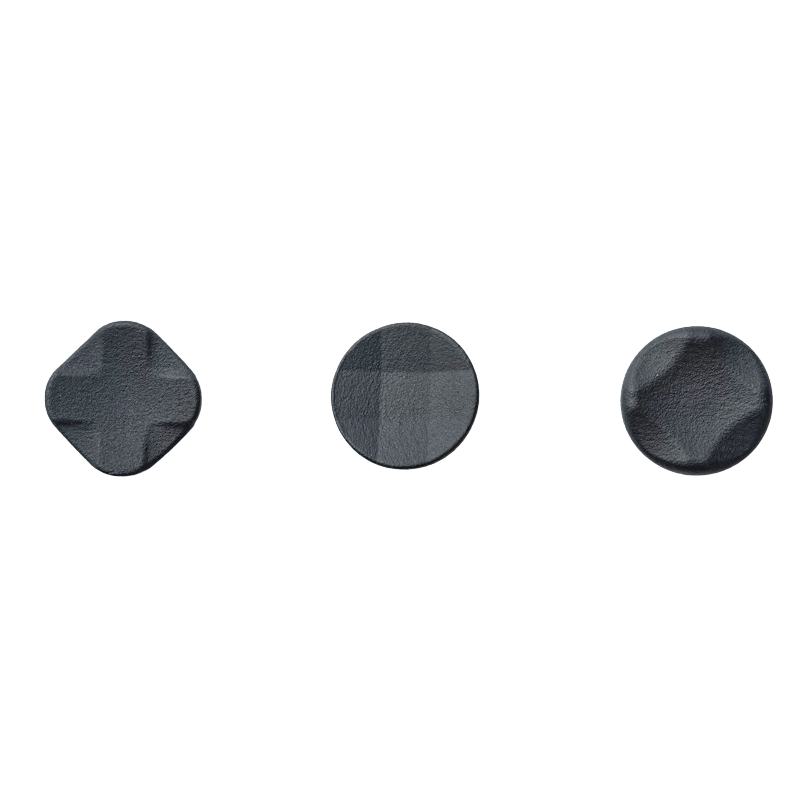
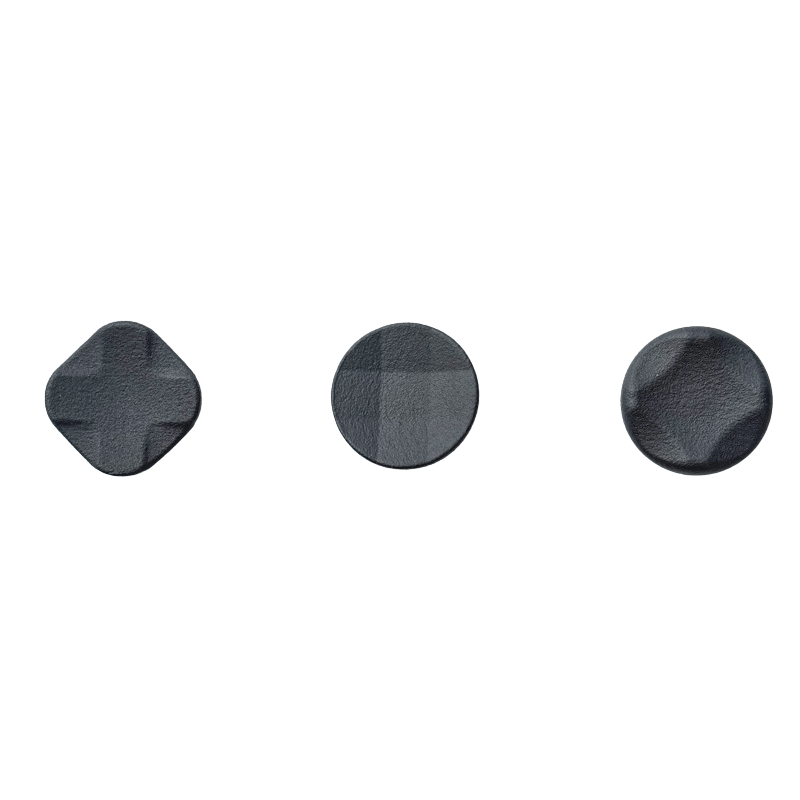
Order ANY Apex 6 series controller — including the Phantom Blade Zero limited edition — before October 20, and a D-Pad Set (a $9.99 value) comes free with your order, from us. No code needed.

Apex 6 Pro
$159.99Live in Elden Ring, Wukong, Horizon, or cinematic AAA? Quad VCM haptics are a genuine generational jump. Our pick for most people.

Apex 6
$149.99Same sticks, same dual-mode triggers, same software — you keep the classic rotor punch and save $10.

Apex 5
$129.99If your main games are on Flydigi's tuned list, nothing else replicates physical trigger resistance — a lot of flagship for the money.
Already own an Apex 5? The upgrade case is: dual-mode triggers, TMR sticks, web Space Station, lighter body, and haptics that work in every game instead of fifty. If those don't move you, your 5 is still a genuinely good controller.
Not sure which model fits your games? Reach us by email support or on Discord — we're happy to help you decide.





Leave a comment
All comments are moderated before being published.
This site is protected by hCaptcha and the hCaptcha Privacy Policy and Terms of Service apply.