































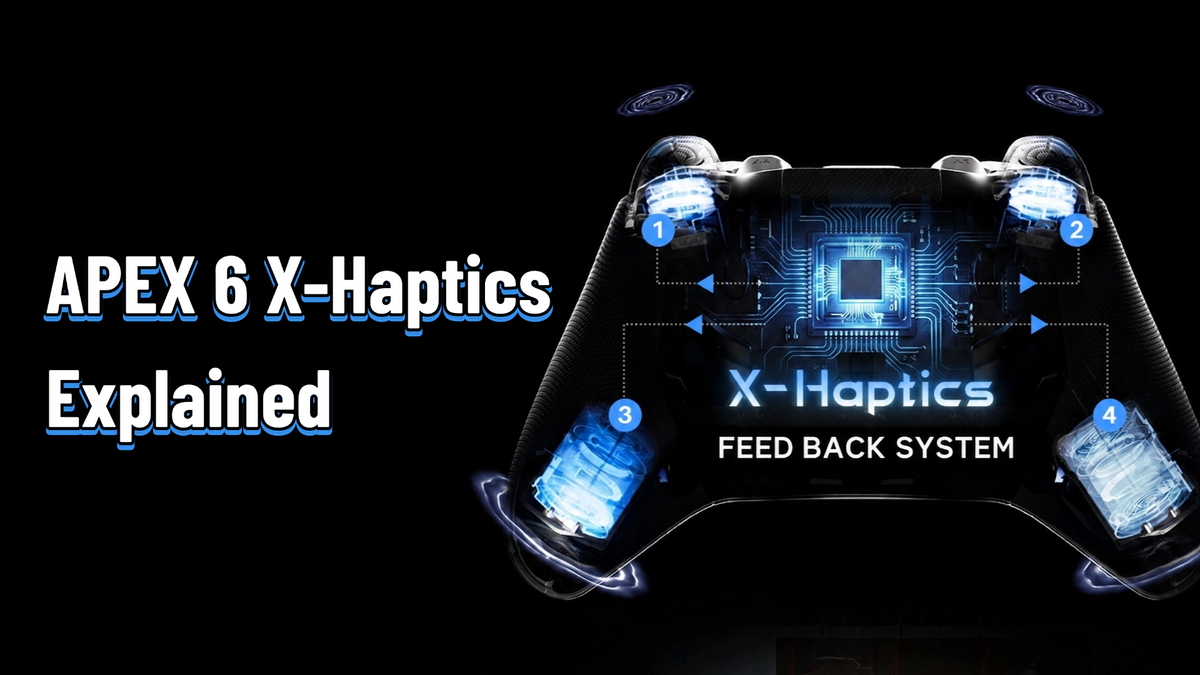
X-Haptics Explained: How the Flydigi Apex 6 Turns Game Audio Into Touch
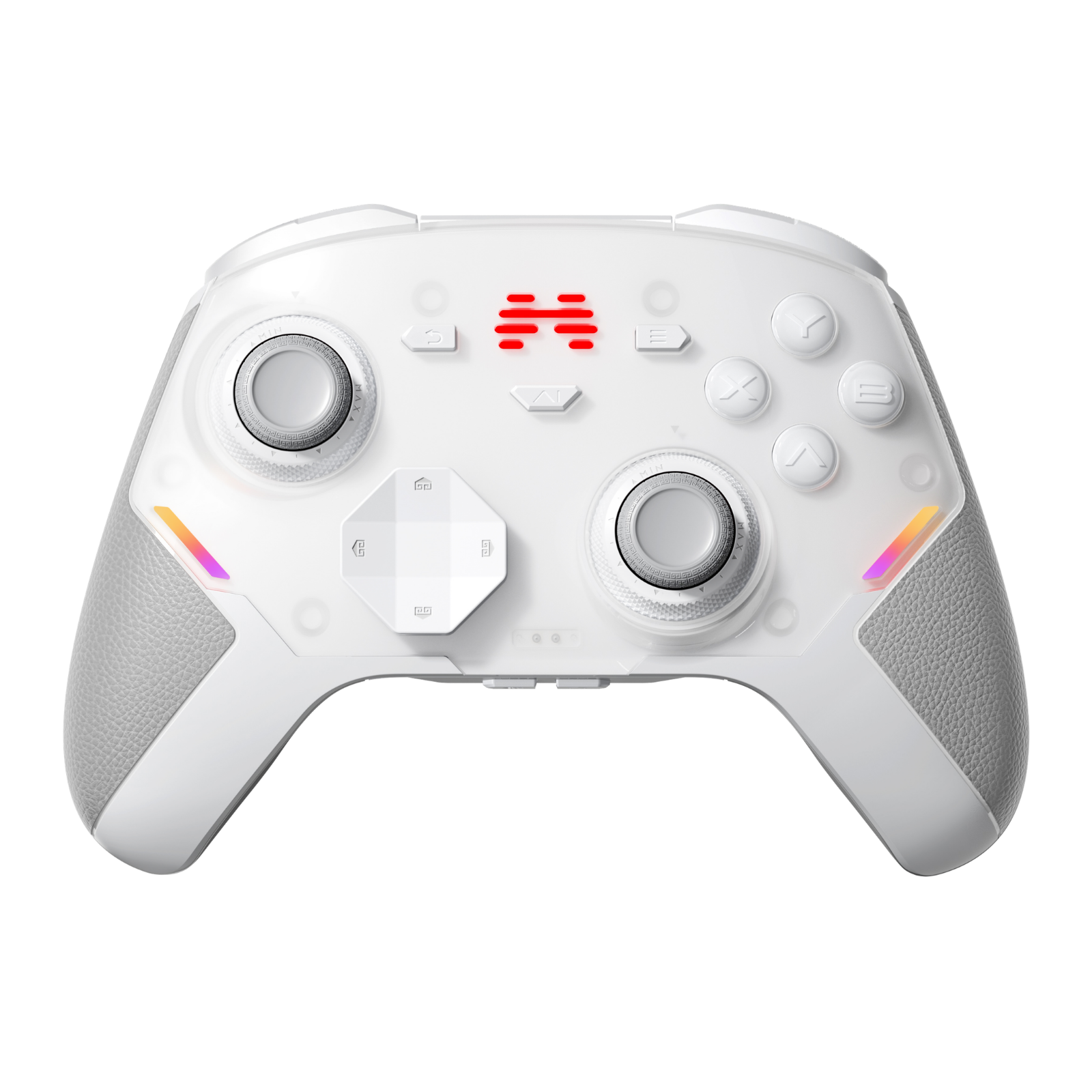
When we reviewed the Flydigi Apex 6 Pro, we called its quad voice coil haptics "the most immersive vibration on PC right now." A fair follow-up question landed in our comments: okay, but what IS X-Haptics, actually? How does a controller vibrate meaningfully in games that were never built for it?
Today we're answering that — what the hardware is, what the software engine does, the two ways games can drive it, and where the whole approach might be heading.
Want the product review first? Read our Apex 6 Pro hands-on review. The three-way comparison with the Apex 5 is here.
Four Motors That Think in Frequency
Quick refresher on the physical layer:
Spinning weights that are great at "BZZT" and not much else. They take time to spin up, time to wind down, and every sensation comes out as the same blur of buzz.
Wide-band voice coil motors — physically closer to tiny speaker drivers than to classic rumble motors. They start and stop almost instantly and reproduce a wide range of frequencies, which means they can render texture: the difference between gravel and tarmac, between a knife hit and a shotgun blast.
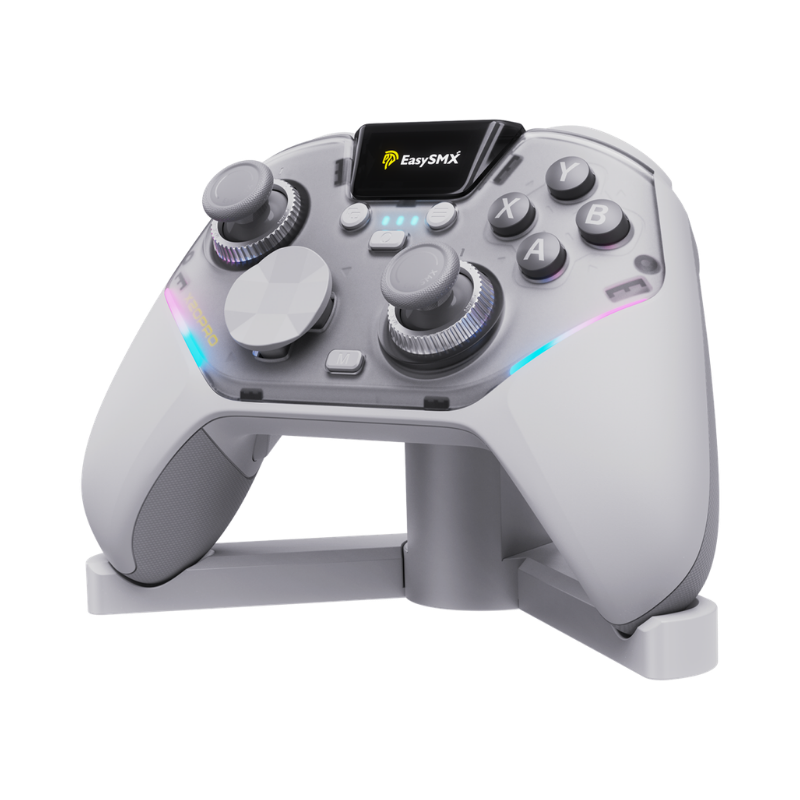
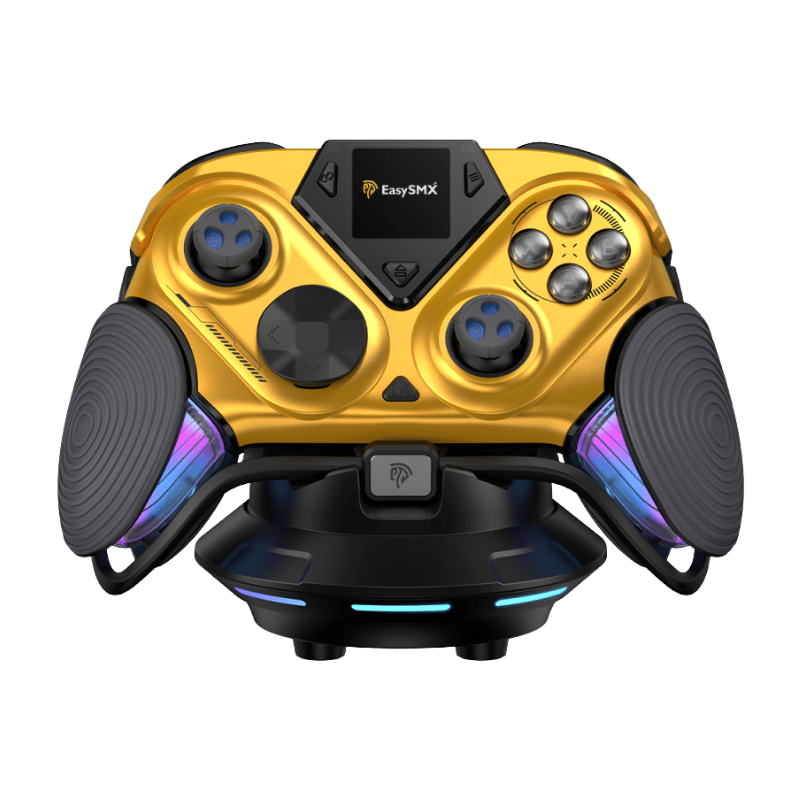
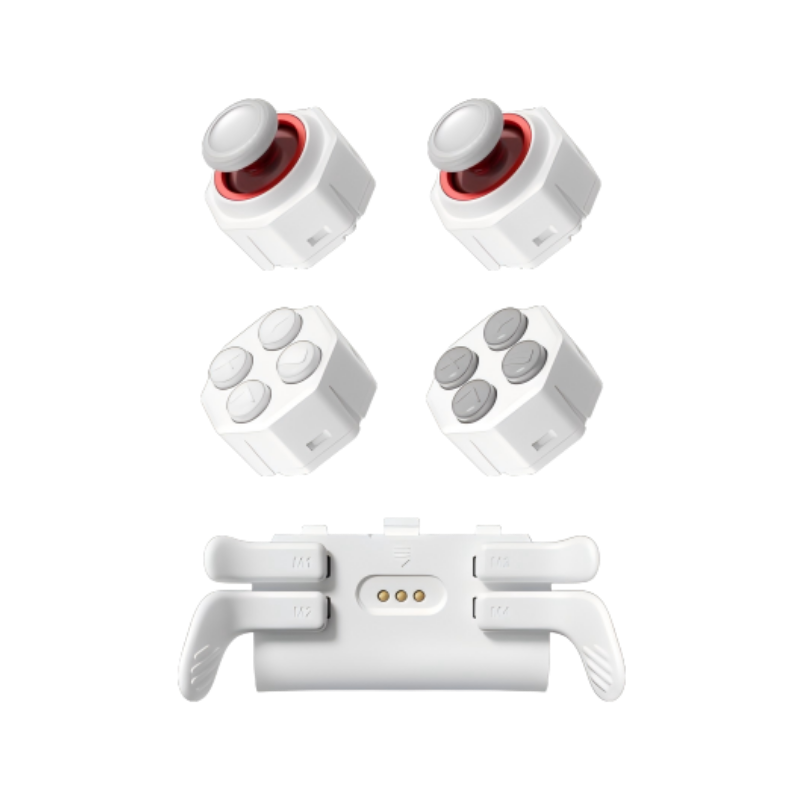
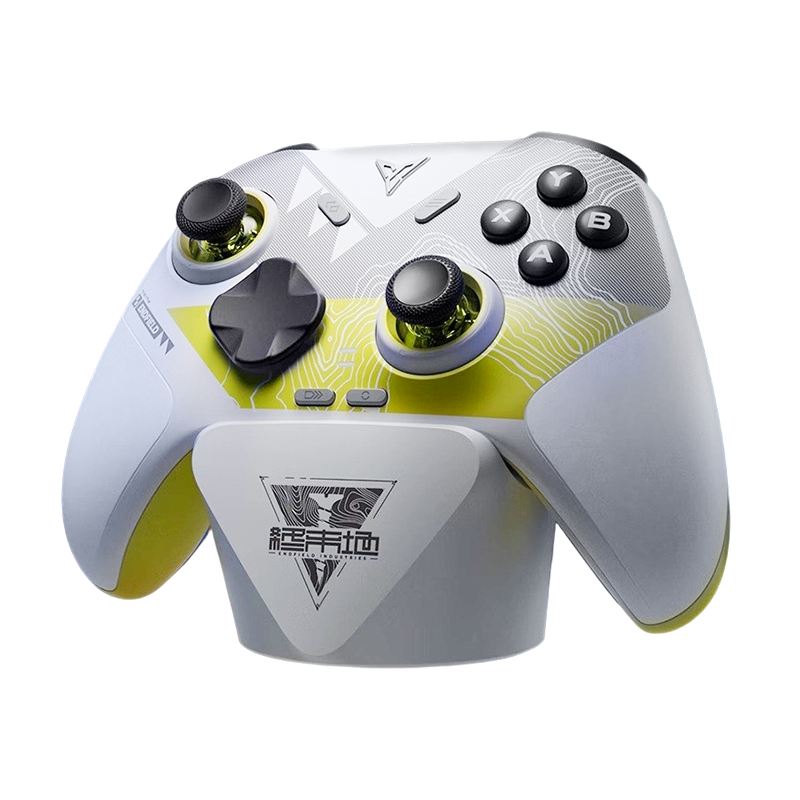
The Apex 6 Pro carries four of them (two grips, two triggers); the standard Apex 6 carries two in the triggers and keeps tuned rotors in the grips. The dual-mode triggers — micro-switch click or smooth Hall linear, with haptics in both modes — are built around those same trigger motors.
But hardware is only half the story. Four great motors with nothing smart driving them is just four expensive buzzers. The engine is the interesting part.

A Mixing Desk for Sound You Can Feel
Here's the mental model that made X-Haptics click for us: it works less like a rumble feature and more like a mixing engineer running a live sound board.
Game audio flows in — every sound the game makes. The X-Haptics engine processes it in real time through a chain of signal processing:
Filtering — cleaning the incoming mix down to what matters.
Frequency-band splitting — separating the mix into tracks by their acoustic fingerprints: gunfire lives in one frequency character, explosions in another, engine drone, drum hits, and bass lines in others.
Envelope extraction — reading the shape of each sound: when it hits, how long it lasts, how it decays.
Transient enhancement — sharpening the attacks, so a gunshot reads as a snap instead of a smear.
Frequency synthesis — rendering those tracks into motor signals the voice coils can actually play.
Then comes routing. The engine doesn't send one blended "vibrate now" signal to the whole controller — it directs different tracks to different motors:
Gunshots and weapon impacts go mostly to the trigger motors, right under your fingertips.
Explosions, road surfaces, crashes go mostly to the grip motors, filling your palms.
Stereo audio maps to the left and right motors — haptics with a sense of space and layering. You feel where a sound is and what kind of thing made it, not just that something loud happened.
Finally, all of this rides to the controller over Flydigi's own low-latency protocol, so the sensation lands in sync with the moment instead of trailing behind it.

Universal Audio, or Surgical Telemetry
This is the default magic: no mods, no per-game support list, no waiting. Any game, any emulator, any video with sound gets haptics. Older games with zero vibration support suddenly have a tactile layer, and it's adjustable — Space Station 5.0 lets you pick between haptic styles (different filter thresholds and frequency weightings) if the default doesn't suit a particular game's audio mix. One honest caveat, consistent with our review: because it reacts to all audio, background music can also trigger the motors in quieter, BGM-heavy games — the style presets and the rotor-emulation grip mode exist precisely to tame that.
Precision mode. For supported titles, the system taps actual game telemetry rather than guessing from audio: throttle position, road surface, impacts, delivered as data and rendered as haptics. It's cleaner, separates grip and trigger channels with surgical accuracy, and it's how the Forza Horizon series integration works.
Here's the part that excites us most: the door is open for players to build their own. During the beta period, one community tester hand-built custom haptic profiles for Forza Horizon 6 — and by their account, with enough care the results can stand toe-to-toe with the DualSense's famously good haptics. That's a glimpse of where this goes: not just a feature list, but a platform.

Why This Matters
Controller vibration has been fundamentally unchanged for decades: a game developer hand-tunes rumble events, your controller plays them back, end of story. If the developer didn't bother, you got nothing. Even Sony's excellent DualSense haptics only exist where studios build for them.
X-Haptics inverts the dependency. Instead of waiting for every game to support your controller, the controller understands the game well enough — through its audio, or its telemetry — to generate the experience itself. In an industry where most controller makers are stuck inside the decades-old XInput framework, competing on polling-rate decimals, this is the first time in years we've seen someone treat "the vibration engine" as a serious product in its own right.
Will it kick off a wave of audio-haptic "HiFi controllers"? Too early to call. But if it does, players win either way — and right now, there's exactly one place to get it.









Leave a comment
All comments are moderated before being published.
This site is protected by hCaptcha and the hCaptcha Privacy Policy and Terms of Service apply.